Opportunity
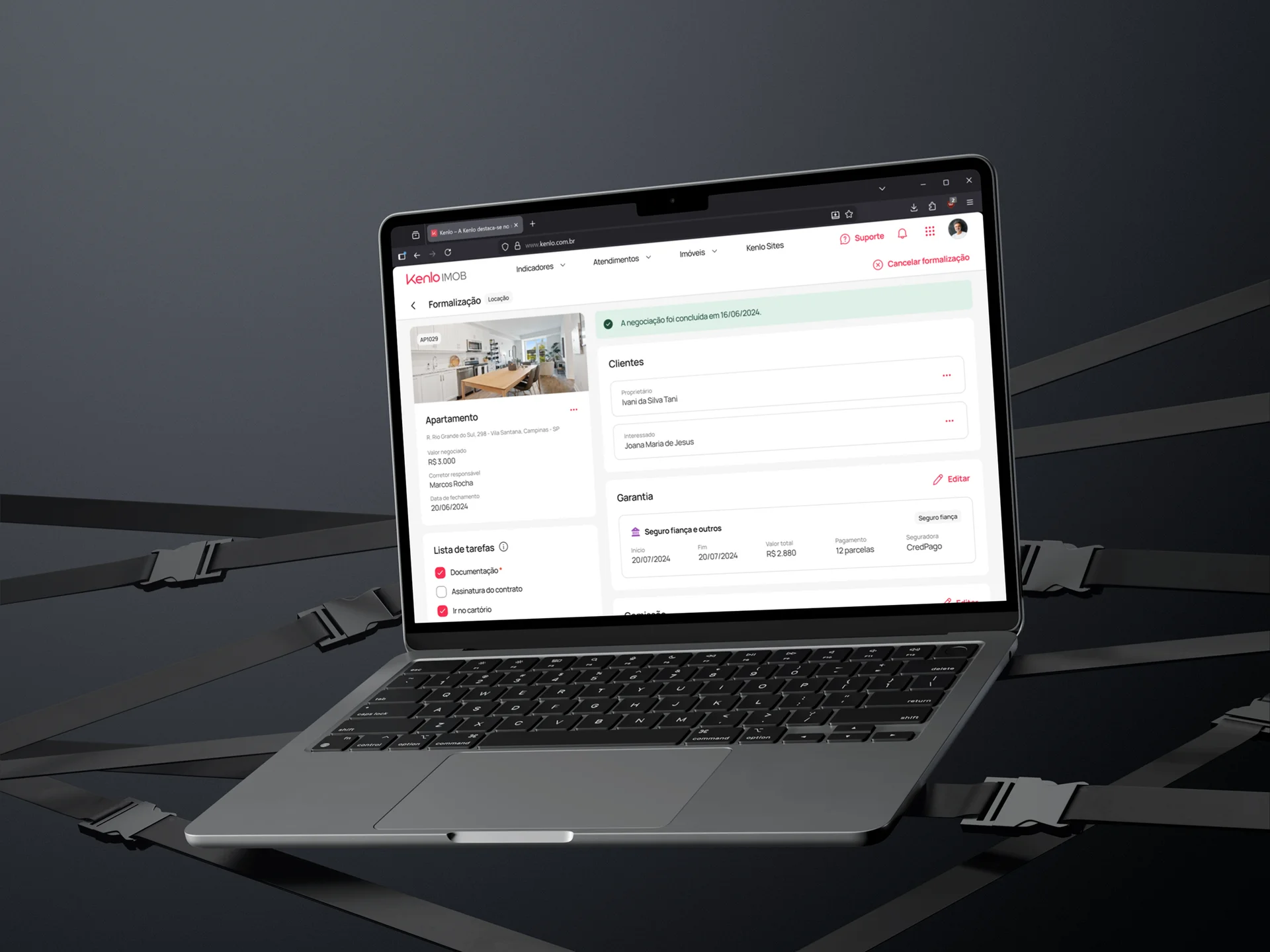
Formalization was the last step before a contract moved into Kenlo Locação, the ERP platform that monetizes per administered contract. It was the point where the deal actually closed.
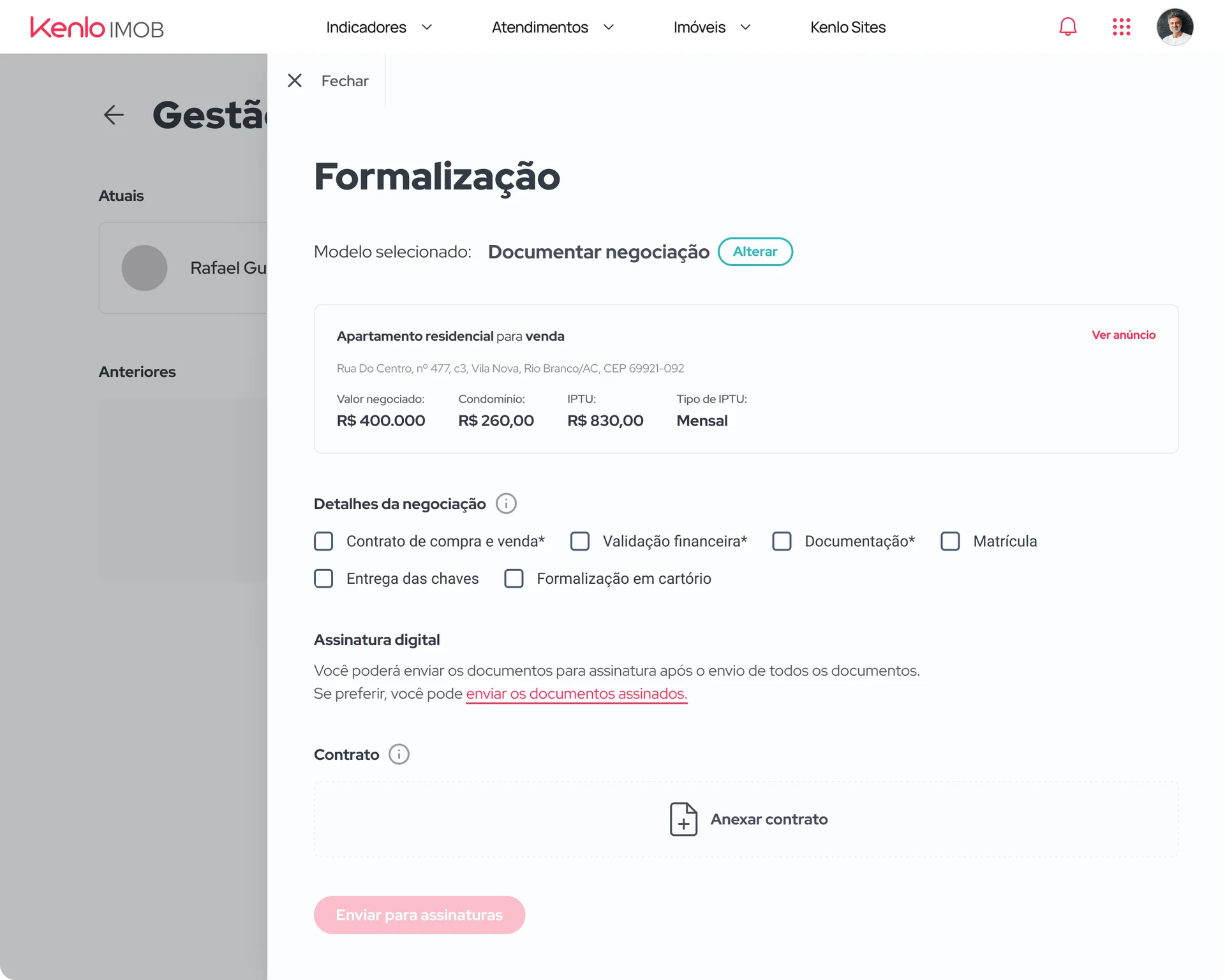
This step had never been rebuilt alongside the rest of the platform. It ran on a different codebase and visual language, functioning as a separate module that frequently broke the experience. When a broker reached this stage, they encountered a rigid flow that required mandatory guarantee, full contract completion, and sequential submission. Any missing field blocked the entire process.
Two compounding factors made this critical at the time:
- Kenlo Garante (Kenlo's proprietary rental guarantee product) had been discontinued, but the guarantee step remained mandatory in the flow. For agencies sending data to Kenlo Locação, selecting guarantee simply sent nothing anywhere, having become a purposeless obstacle.
- The pipeline had no commission management, a feature that existed in the old system. Brokers who started a service in the new platform would return to the legacy system to close it, or use external tools.
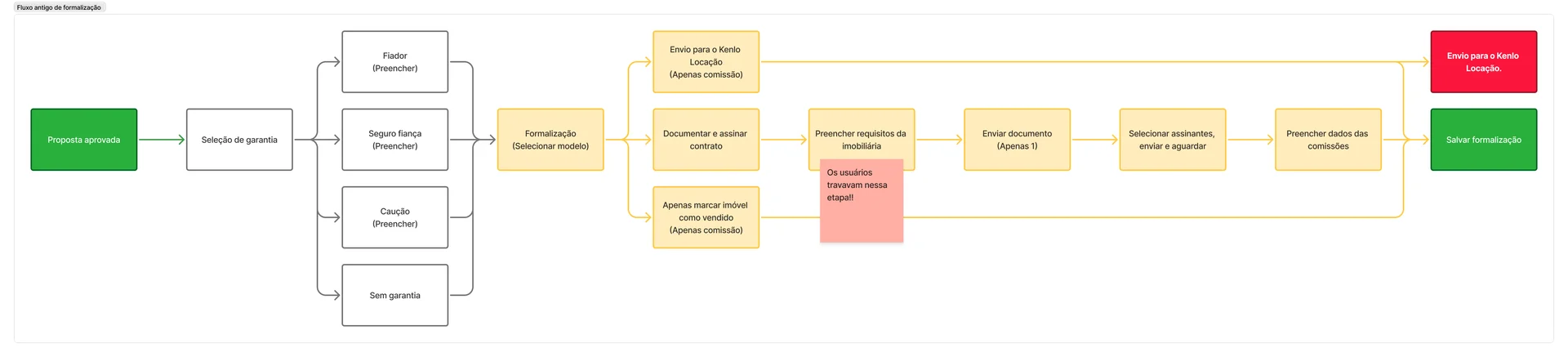
The identified risk was that the way formalization was organized tied the product to a very specific process. For a company with national reach, coming across as a niche solution is a severe growth constraint. Every process that differed from what the system expected required training and workarounds, and the Brazilian real estate market is simply not homogeneous enough for a single rigid flow to work.
Discovery
I led the research entirely, combining quantitative data and qualitative sessions to validate hypotheses before proposing any direction.
I used MoEngage, a recently implemented engagement tool, to run surveys with the user base at scale. To recruit participants for testing, I requested support from the Customer Support team, who had direct contact with clients experiencing formalization issues. I ran 8 usability sessions with automatic annotation tools for recording and analysis.
What I found
- Agencies from different regions, sizes, and business models had completely different closing flows. No guarantee, verbal proposal first, commissions split among multiple parties. The system accommodated none of these variations.
- Features that could reduce friction were invisible: electronic signature existed on the platform but had less than 2% usage, not from lack of need, but from lack of visibility.
- Submission errors to the ERP came from mandatory fields that didn't apply to all profiles, with error messages that didn't help brokers understand what to fix.
Results
Design decisions
The guiding principle was replacing rigidity with flexibility. Instead of leading the broker through a single mandatory path, the system now allowed them to complete formalization according to their agency's own process.
Modular, continuous flow: proposal and formalization were integrated; guarantee became optional; client, property, task, and document edits became independent, with no fixed required order.
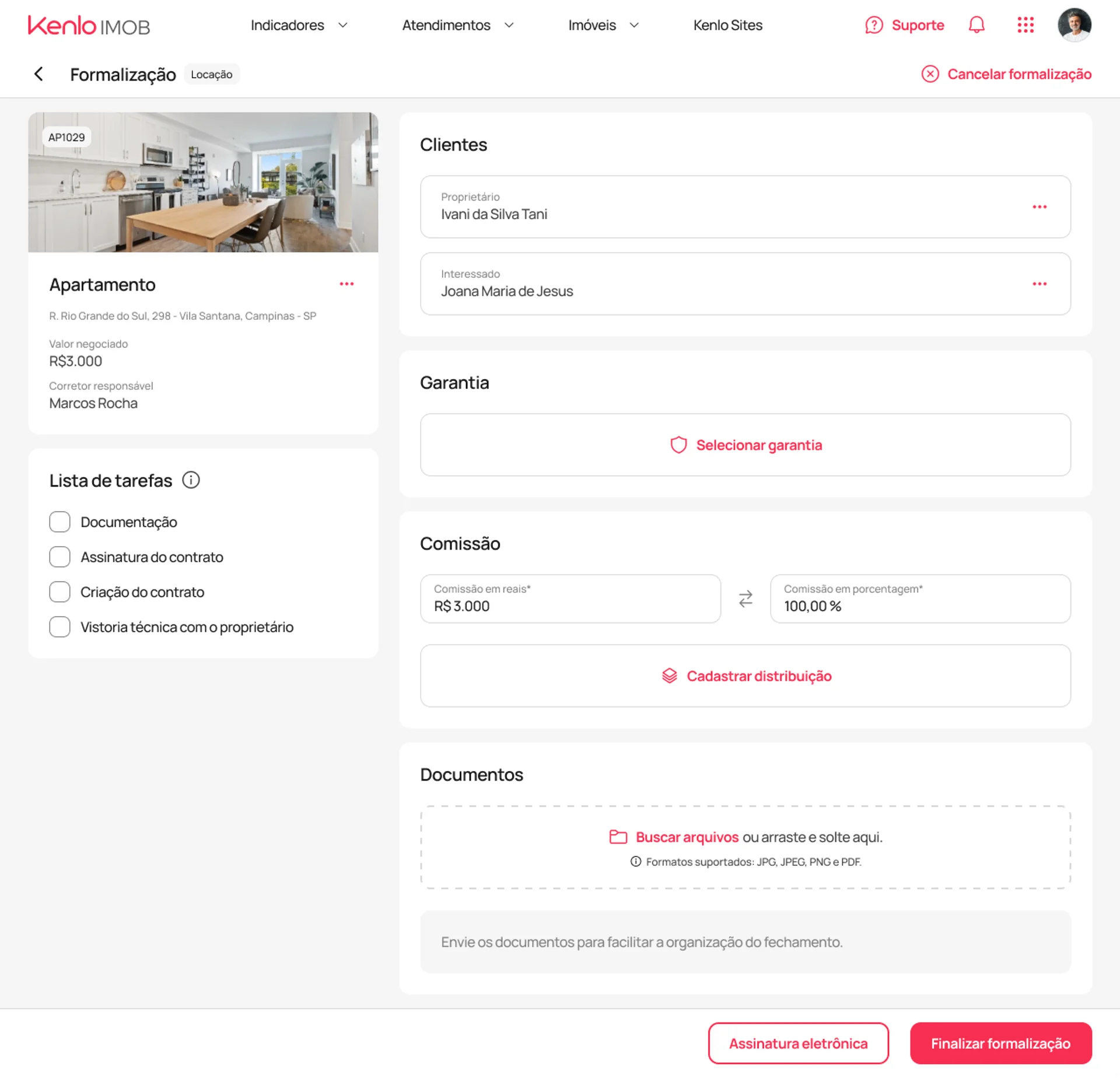
Configurable checklist: managers could now configure formalization tasks per agency, with traceability of who completed each step.
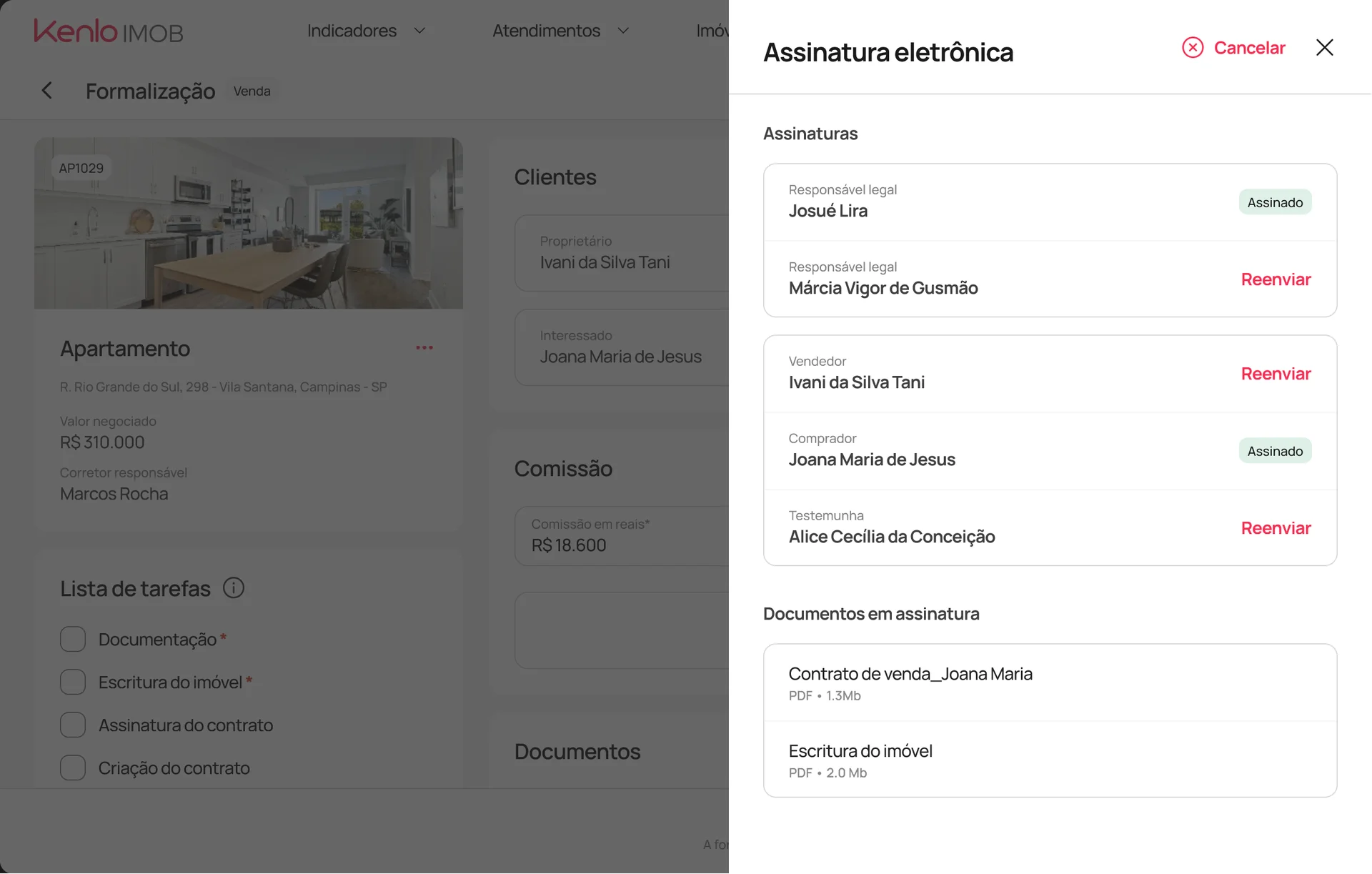
Redesigned electronic signature: gained visual prominence, a clear CTA, and support for multiple documents. Usage jumped from less than 2% to ~29% of closings, and the feature began to be sold as a standalone product.
Resilient integrations: real-time validation, proactive alerts for missing fields, and quick editing without leaving the screen reduced the ERP submission errors that had been blocking the flow.
Self-service cancellation: brokers could now cancel formalizations without opening a support ticket, reducing support load.
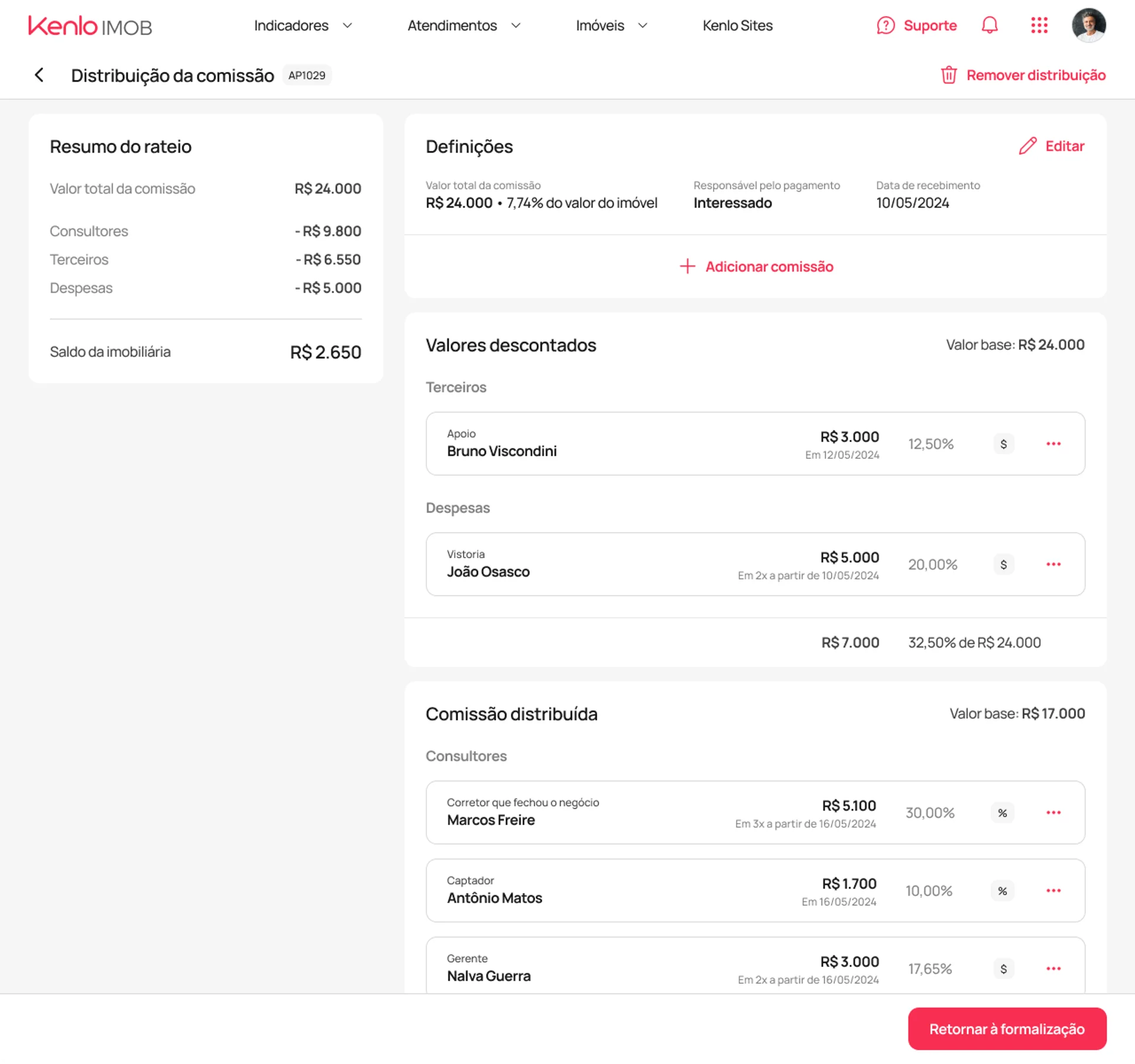
Configurable commissions: logic adaptable to multiple split models, covering the profiles that previously had to leave the platform to close that process.
Handoff and technical collaboration
This was the project where I fundamentally changed how I document and deliver work. I completely restructured the logic: each section of the document now represents a user journey, not a grouping of screens.
In practice, the handoff had flows like those shown in the image below. Each flow included directional arrows for sequence, error scenarios, context variants, and detailed unfilled fields. Any change from something existing or previously shown was accompanied by a note explaining what changed, why, and under what condition.
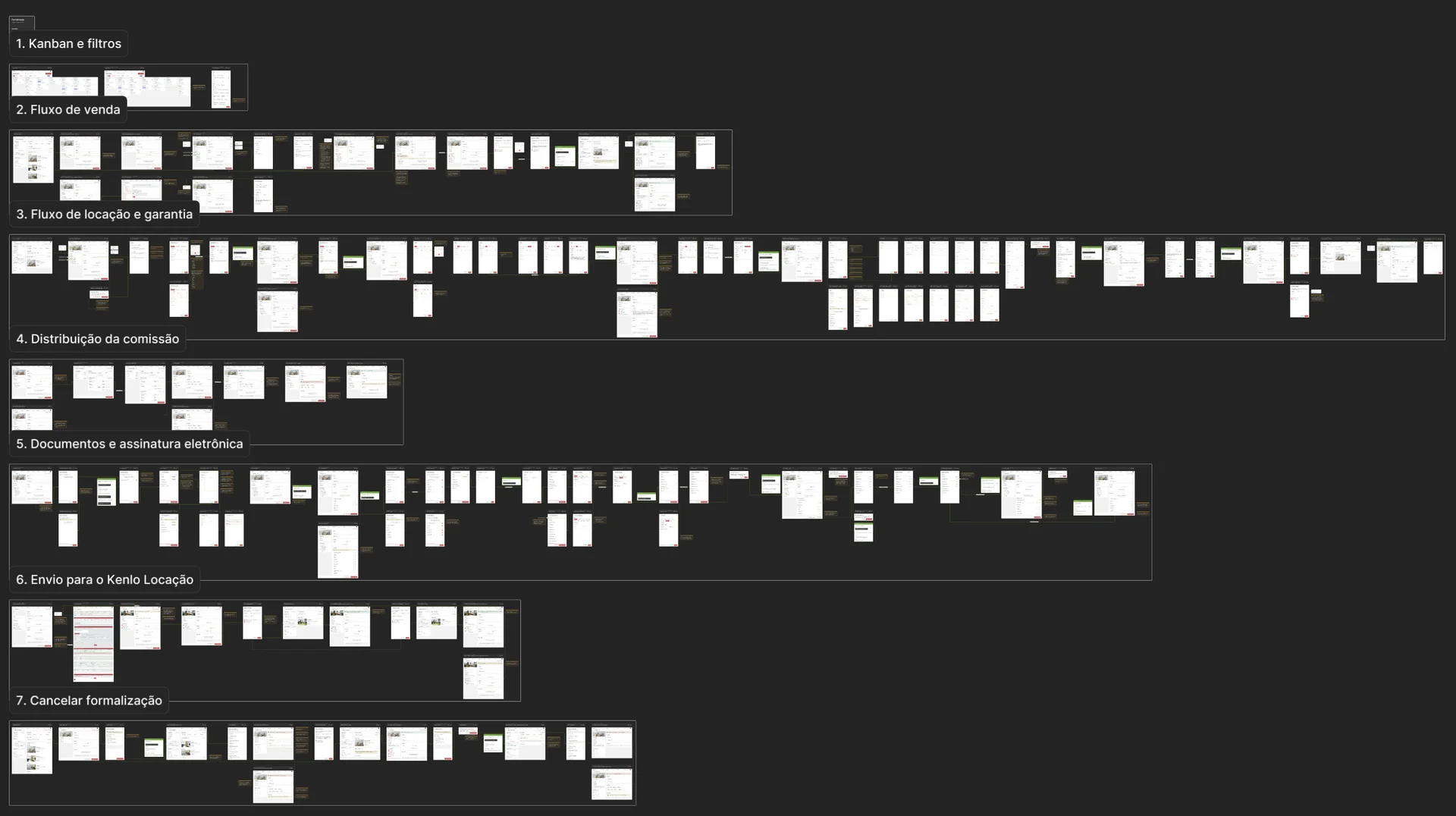
This allowed the development team to understand not just what to build, but the expected behavior at the end of each journey. The rework that had marked previous projects didn't repeat.
For development stories, I used this structure to generate acceptance criteria with AI from the specifications. The level of detail and clarity of acceptance criteria were praised by the team.
Deploy
The launch brought a surprise that stuck with me: the main reaction from users wasn't about new features. It was about simplicity. A client asked how to complete formalization without filling in any information beyond the essentials. The answer was just to click "Finalize." That actually seemed wrong to someone used to the previous flow.
Changes that generated the most internal apprehension, like the unified guarantee within formalization and the new document submission flow, were the ones most praised by users.
Metrics
Monthly closings
20/mo → +1,000/mo
Over a 12-month period
Completion time
15 days → 3 days
Average for new services
Electronic signature
<2% → ~29%
Of completed closings
Electronic signature began to be sold as a complementary product to the CRM, with more than 100 active agencies at the time this case was written.
Learnings
Process rigidity is a market constraint, not just a UX one
The previous system wasn't just hard to use. It implicitly excluded agencies that worked differently. In a diverse national market, imposing a single flow is a business decision, not just a product one. Research with varied profiles gave me the arguments to defend flexibility as a principle, not a concession.
Invisible functionality is nonexistent functionality
Electronic signature was already in the product. Nobody was using it. It was a discovery and visual hierarchy problem. Repositioning and highlighting it was enough to multiply usage 14x. Since then, I evaluate adoption of existing features before proposing anything new.
Journey-based handoff eliminates ambiguity in development
Organizing the handoff around user journeys was the change that most impacted execution quality. The team came to understand the expected behavior, not just the expected appearance. It's the format I use in every project since.